
Romantic Conversations
Sunday, October 11, 2026 – 4:00pm
Monday, October 12, 2026 – 7:30pm
Music by Schumann, Dvořák, and Danielpour
1.75 hours, including intermission

The season begins with a program of intimate musical conversations featuring the Espressivo! Piano Quartet. Richard Danielpour’s world premiere work, Epiphanies for String Trio, opens the concert before two masterworks of the Romantic piano quartet tradition take center stage. Dvořák’s melodic generosity and Schumann’s passionate lyricism provide rich musical dialogues that explore the full range of human emotions through these works.
Program
Richard Danielpour – Epiphanies for String Trio (World Premiere)
Antonín Dvořák – Quartet for Piano & Strings No. 1 in D Major, Op. 23
Robert Schumann – Quartet for Piano & Strings in E-flat Major, Op. 47
Read Program Notes
Artists
Espressivo! Piano Quartet
Anna Polonsky, piano
Jaime Laredo, violin
Milena Pájaro-van de Stadt, viola
Sharaon Robinson, cello

Espressivo! Piano Quartet
ensemble
Venue
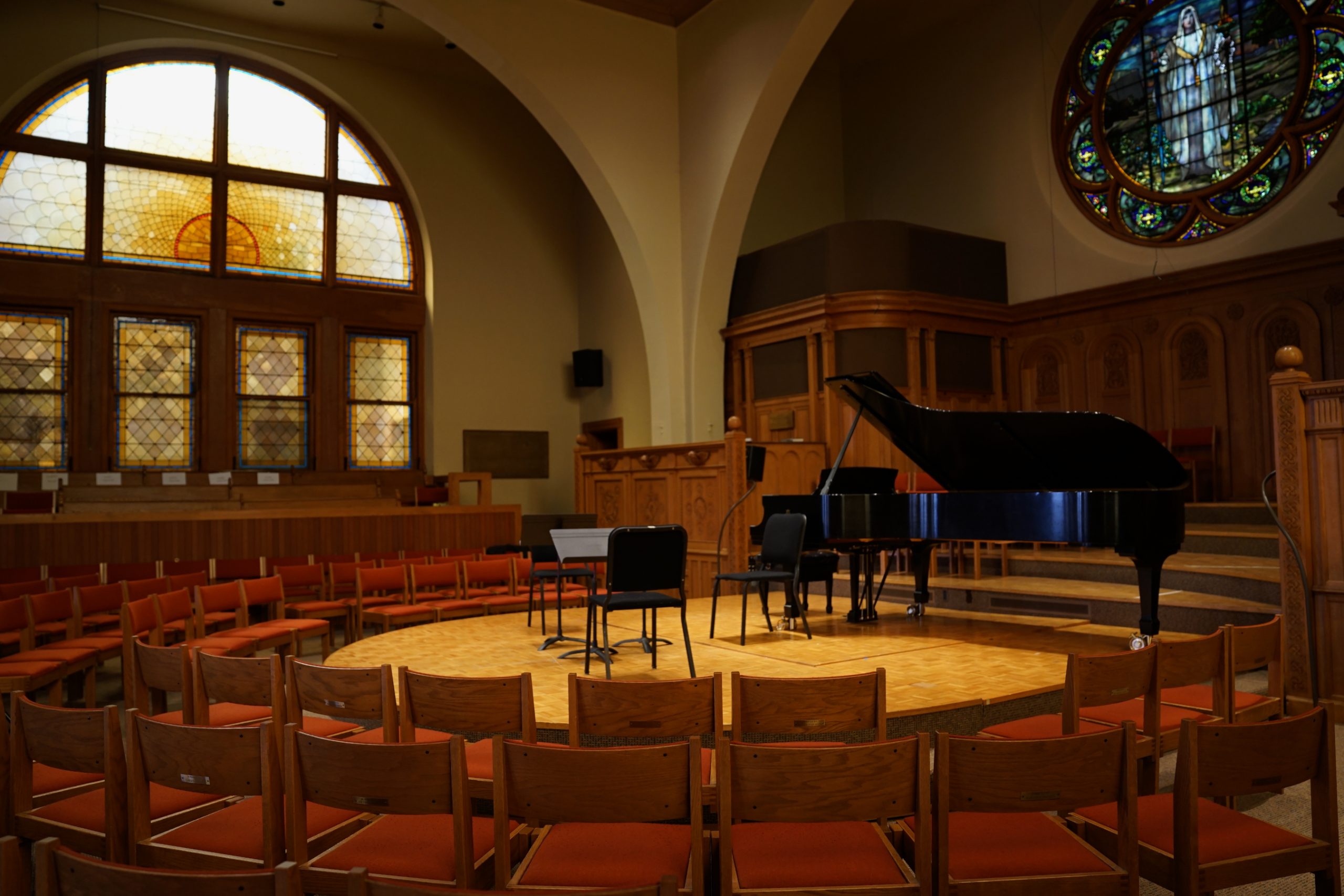
Sunday Afternoons – Linton Chamber Music Series
First Unitarian Church
536 Linton Street
Cincinnati, OH 45219
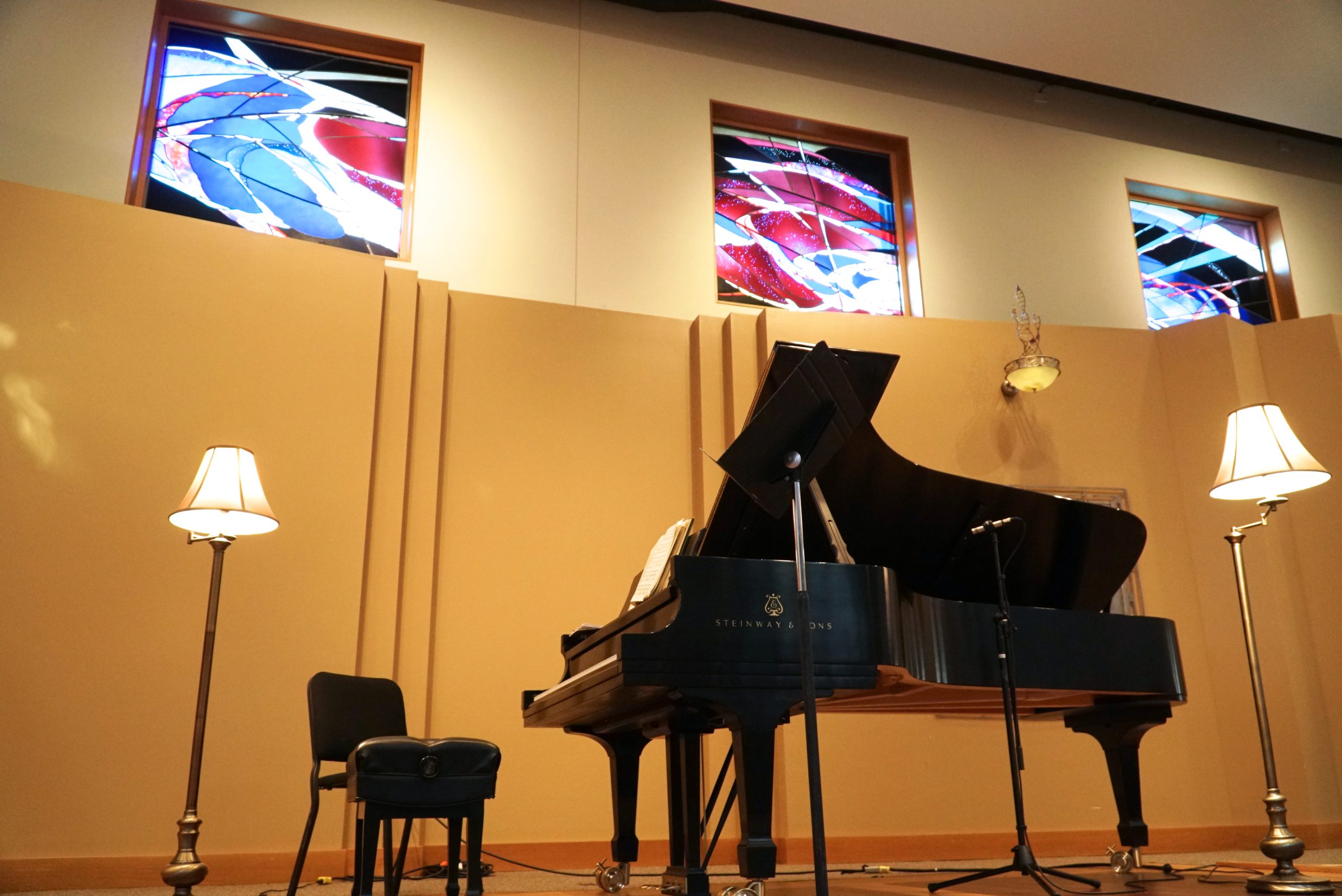
Monday Evenings – Encore! Linton Series
Congregation Beth Adam
10001 Loveland Madeira Road
Loveland, OH 45140
Program Notes
Richard Danielpour (1956 –)
Epiphanies for String Trio (World Premiere)
My String Trio was written as a result of a phone call on New Year’s Day, 2026, with my dear friends Sharon Robinson and Jaime Laredo. I’ve always been in awe of both Jaime and Sharon both as artists and human beings. We were chatting about their piano quartet ESPRESSIVO! and I was thrilled to hear that they were performing my Piano Quartet THE BOOK OF HOURS from 2007. I mentioned that I had always wanted to write a string trio. Both Jaime and Sharon said that they would love to have a trio from me that they could program in their concerts, and so the very next day I started composing the work!
Two weeks later Sharon informed me that several presenters would love to co-commission my String Trio and were eager to program it the very next season. I had just put the finishing touches on a 75-minute Oratorio for large chorus, three soloists and orchestra on the life of Saint Francis of Assisi, and it is my habit to write a smaller work after completing a major work. Writing this Trio was both a privilege, in that I was composing this for my dear friends of over 30 years, but also a welcome change from having been absorbed with a work that took me over two years to complete.
I turned 70 at the end of January 2026, and when one reaches this age, the natural inclination is to take inventory of one’s life. In reviewing the joys and sorrows that life inevitably brings, I realized that all of this life brings the potential for new discoveries and understandings. It also carries with it a sense of blessing and the particular ability to sustain the losses in our lives, and to appreciate the very gift of our lives as we have lived it. It is for this reason that this work is subtitled “Epiphanies”, which implies a sense of discovery and revelation.
One last note: the last movement of this String Trio was written in memory of pianist Joseph Kalichstein, who was not only my friend, but was also deeply loved by Jaime and Sharon. He was the beloved pianist of the Kalichstein-Laredo-Robinson Trio for 45 years, and was always very kind to me. I particularly remember how encouraging he was to me early on when my music was relatively unknown. I never forgot this kindness. And so with loss comes gratitude and finally the understanding of what is truly meaningful in life. As Leonard Bernstein said to me many years ago, “in the end, it’s all about love.”
– Richard Danielpour, August 1, 2026
Antonín Dvořák (1841 – 1904)
Quartet for Piano & Strings No. 1 in D Major, Op. 23
When Dvořák composed his first Piano Quartet in 1875, the 34-year-old composer was still largely unknown beyond Prague. That year, however, marked an important turning point: a newly-awarded state scholarship eased his financial burdens and allowed him to devote more of his attention to composition. Dvořák completed the quartet in only eighteen days, alongside several other works that increasingly revealed the musical personality that would soon bring him international recognition. Although none of its melodies are actual folk tunes, the quartet is among his earliest chamber works to incorporate the rhythms, melodic contours, and unmistakable flavor of Czech folk music into established Classical forms. Its generous proportions and abundance of ideas reveal an ambitious young composer, while its lyricism, instrumental color, and easy movement between melancholy and exuberance already sound unmistakably like Dvořák. The work waited five years for its premiere, finally receiving its first performance in Prague in December 1880.
The expansive opening movement immediately displays Dvořák’s seemingly inexhaustible melodic gift. A relaxed, syncopated theme first emerges in the cello and is answered by the violin, beginning a conversation that soon spreads throughout the ensemble. Rather than treating the piano as a soloist supported by three strings, Dvořák gives all four musicians considerable independence, continually reshuffling melodies and accompaniments to create an unusually varied palette of colors. The central Andantino turns inward with a melancholy theme in B minor followed by five variations. At first Dvořák transforms his theme gently, changing its texture and instrumental dress; later variations travel farther afield, including a radiant excursion into E-flat major and a passage in which fragments of the melody overlap among the instruments. The original theme eventually returns, but its final appearance rises to a surprisingly intense climax before fading away.
With only three movements, Dvořák cleverly asks the finale to perform double duty, combining the functions of a scherzo and a traditional closing movement. Its recurring theme has an easygoing, waltz-like quality, enlivened by offbeat accents and rhythmic displacements that sometimes suggest the vigorous Czech furiant. Between its appearances, Dvořák introduces broader, more lyrical episodes and develops them with an intensity more characteristic of sonata form than a conventional rondo. As the movement progresses, these contrasting personalities increasingly mingle: graceful dance, rustic humor, lyrical warmth, and flashes of virtuosity tumble into one another before the music accelerates toward its conclusion. The result may lack some of the economy of Dvořák’s later masterpieces, but its very abundance is part of its appeal—a young composer discovering just how much of his emerging Bohemian voice could fit within the traditions of chamber music.
Robert Schumann (1810 – 1856)
Quartet for Piano & Strings in E-flat Major, Op. 47
Schumann had a habit of immersing himself in one musical genre at a time. After years devoted primarily to the piano, 1840 became his celebrated “year of song,” followed by a concentrated exploration of orchestral music in 1841. Then came 1842, his “year of chamber music.” In a remarkable six-month period, Schumann produced three string quartets, the Piano Quintet in E-flat, the Piano Quartet in E-flat, and the work later published as Fantasiestücke, Op. 88. The Piano Quartet followed immediately on the heels of the more famous Quintet, taking shape between October 25 and November 26. Schumann dedicated it to the amateur cellist Count Matvei Wielhorsky, but its brilliant keyboard writing also reflects the inspiration of his wife, Clara, one of Europe’s foremost pianists. She greeted the new work enthusiastically, describing it in her diary as “so youthful and fresh, as if it were his first.”
The first movement emerges from a hushed, questioning introduction whose four-note figure becomes the seed for much of what follows. With the arrival of the Allegro, that tentative gesture suddenly springs to life, generating a wealth of energetic and lyrical material shared conversationally among piano and strings. The fleeting scherzo is even more restless, rushing forward in the nimble, fantastical manner often associated with Schumann’s friend Felix Mendelssohn. Two contrasting trios interrupt its headlong motion, but fragments of the scherzo continually intrude, binding the entire movement into an almost uninterrupted stream. The quartet then reaches its emotional center in the Andante cantabile, where the cello introduces one of Schumann’s most memorable melodies—a broad, yearning song that passes through the ensemble before giving way to a contemplative, chorale-like middle section.
As the slow movement draws toward its ethereal conclusion, Schumann asks the cellist to quietly retune the lowest string from C down to B-flat, allowing it to sustain a remarkably deep foundation beneath the ensemble. Out of this stillness comes a subtle preview of the idea that will ignite the finale. When it returns at full speed, the viola launches a vigorous theme that is taken up successively by the other instruments and developed in a dazzling web of counterpoint. Schumann and Clara had spent considerable time together studying the fugues of Bach, and that fascination is unmistakable here, though Schumann continually interrupts the learned counterpoint with surging Romantic melodies and syncopated rhythms. Near the end, several ideas are ingeniously brought together at once, transforming what began as an exercise in counterpoint into a jubilant rush toward the finish. It is a fitting conclusion to a work that continually reconciles two sides of Schumann’s musical personality: the disciplined student of Bach and the irrepressible Romantic poet.